






When it comes to shoes, size matters—especially when navigating the quirky world of youth and women’s sizing. Picture this: a teenager’s excitement over new kicks, only to discover they’re stuck in a size meant for toddlers. Oops! Understanding the differences between youth shoe sizes and women’s sizes can save a lot of heartache and awkward moments at the shoe store.
Understanding Shoe Size Charts
Understanding shoe size charts is crucial for making informed footwear choices. Accurate sizing minimizes confusion and enhances the shopping experience.
The Importance of Accurate Sizing
Accurate sizing ensures the right fit for comfort and support. Poorly fitting shoes often lead to discomfort, with issues like blisters or foot pain. Youth sizes differ significantly from adult sizes, affecting both appearance and practicality. Special attention to sizing helps avoid mismatched purchases that can disappoint shoppers. Choosing the correct size contributes to foot health, especially for growing feet. Knowing the size conversion can be especially useful when shopping online.
How Shoe Sizes Differ by Gender
Shoe sizes vary between genders due to different foot shapes and proportions. Generally, women’s shoes feature a narrower fit, suited to their foot structure. Youth sizes typically follow a scale that corresponds with both boys’ and girls’ foot dimensions but may not account for women’s width preferences. Numbers in youth sizing can differ from women’s even when the length appears similar. Recognizing these differences ensures that the right size correlates to the correct gender specification, fostering a more satisfying shopping experience. Understanding these distinctions simplifies finding the appropriate footwear for individual needs.
Youth Shoe Size Chart Overview
Understanding youth shoe sizes is important for accurately selecting footwear. Youth sizes typically span from 1 to 7 in the US sizing system.
Common Youth Shoe Sizes
Common youth shoe sizes include 1, 2, 3, 4, 5, 6, and 7. While these sizes represent the range for boys and girls, actual dimensions can vary between brands. For instance, a size 4 youth shoe from one manufacturer may not fit the same as that from another. Most children transition through these sizes quickly as their feet grow. Parents should expect to purchase new shoes frequently to accommodate rapid growth spurts in their children.
Measuring Youth Shoe Sizes
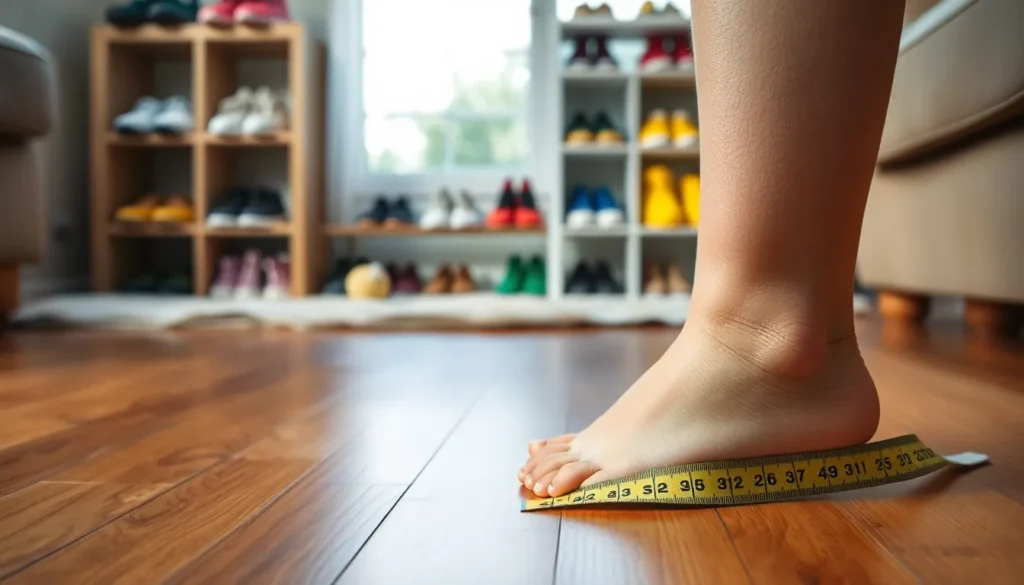
Measuring youth shoe sizes involves determining the correct foot length. To measure, place a ruler or measuring tape against a wall and have the child stand on a piece of paper with heels touching the wall. Mark the longest toe on the paper, then measure the distance from the wall to the mark. This method helps identify the appropriate size on a shoe size chart. Keeping in mind that shoes may fit differently, trying them on before buying is always advisable. Regular measurements can prevent purchasing ill-fitting shoes that may lead to discomfort.
Women’s Shoe Size Chart Overview
Women’s shoe sizes typically range from 5 to 12 in the US system, with half sizes available in most styles. Common sizes include 6, 7, and 8, which are among the most frequently purchased. Variations in size exist based on brand and style, so a size 8 in one brand may not fit the same as in another. Width can also differ, with options like narrow, standard, and wide affecting overall fit and comfort.
Common Women’s Shoe Sizes
Standard women’s sizes range between 5 and 12. Size 8 is a popular choice, representing a significant percentage of sales. Size 9 often accommodates those with a slightly larger foot, while sizes 7 and 10 serve various preferences. Wider feet typically require a different fit and might translate to styles labeled as wide. Knowing these common sizes helps shoppers choose footwear more effectively.
Measuring Women’s Shoe Sizes
To measure a woman’s shoe size accurately, begin with foot length. Stand barefoot on a flat surface, placing the heel against a wall. Mark the longest toe on a piece of paper. Measuring from the wall to the marked point reveals the foot length in inches or centimeters. Various size charts provide corresponding shoe sizes based on that measurement. Trying shoes on remains essential for confirming fit, as sizing can vary by manufacturer.
Comparing Youth and Women’s Shoe Sizes
Understanding the differences between youth and women’s shoe sizes is crucial. Shoppers should know how to convert sizes accurately to avoid any confusion.
Size Conversion Methods
Converting youth shoe sizes to women’s sizes often requires adding 1.5 to 2 sizes. For example, a youth size 5 typically corresponds to a women’s size 6.5 or 7. Shoe size charts provide a helpful reference for these conversions. Many brands also offer their specific size guides, which helps clarify any discrepancies. When possible, trying shoes on before buying remains the best way to ensure a proper fit. This approach mitigates potential issues related to sizing inconsistencies across different manufacturers.
Factors Influencing Size Differences
Several factors contribute to size differences between youth and women’s shoes. Firstly, shoe construction and design play significant roles. Youth shoes often feature a broader fit to accommodate growth, while women’s styles generally focus on a narrower silhouette. Additionally, foot shape varies among individuals, influencing overall comfort. Another key aspect includes the difference in foot development stages. Growing feet require flexibility and support, making proper sizing even more essential for young wearers. Manufacturer standards also vary, resulting in inconsistencies that shoppers should remain aware of when selecting footwear.
Tips for Choosing the Right Size
Choosing the right shoe size involves careful consideration of various factors. Ensuring both fit and comfort plays a vital role in selecting footwear.
Considering Fit and Comfort
Fit and comfort significantly affect how shoes feel during wear. Shoes should provide enough room for toes without squeezing them, promoting healthy foot development. It’s beneficial to try shoes on later in the day when feet tend to swell, ensuring a more accurate fit. Remember, the appropriate width is as crucial as the length, with different brands offering varying fits. Excessively tight or loose shoes can lead to foot problems, so finding a snug yet comfortable fit is essential. Shopping with the right sock thickness also helps achieve a better fit, especially for athletic footwear.
Resources for Accurate Sizing
Utilizing reliable sizing resources aids in selecting the correct shoe size. Shoe size charts available online provide clear guidelines for youth and women’s conversions. Brands often have unique sizing variations, making it essential to consult specific charts before purchasing. Measurement tools, such as foot scales and printable rulers, offer accurate length suggestions. Additionally, website reviews can provide insights into the fit and comfort of different styles. Local shoe stores frequently assist with proper measurements, ensuring the best fit. Combining these resources enhances the shopping experience, leading to informed decisions.
Understanding the differences between youth and women’s shoe sizes is essential for making informed footwear choices. By recognizing how sizes vary and the importance of fit, shoppers can avoid the pitfalls of purchasing ill-fitting shoes. Proper sizing not only enhances comfort but also supports foot health, especially for growing feet.
Utilizing size charts and measuring techniques can simplify the shopping experience. It’s crucial to remember that what works for one brand may not work for another. Armed with this knowledge, shoppers can confidently select the right footwear that meets their individual needs, ensuring both style and comfort.