





When flags fly at half staff or half mast, it’s more than just a fashion statement for fabric. It’s a powerful symbol of respect, mourning, and remembrance. But wait—what’s the difference between half staff and half mast? It turns out, this isn’t just a trivia question for your next Zoom party. Understanding the nuances can make you the star of the show, impressing friends and colleagues alike with your newfound knowledge.
Whether you’re a flag enthusiast or just someone who’s curious about this age-old tradition, grasping the meaning behind these terms adds a layer of depth to your appreciation of national and local customs. So buckle up and get ready to dive into the world of flags, where every dip tells a story, and every hoist has a history.
Understanding Half Staff Or Half Mast
Flags flown at half staff or half mast carry deep symbolism. These terms indicate a sign of respect, mourning, and remembrance for individuals or events.
Definition of Half Staff
Half staff is primarily used in the United States. The expression denotes the position of a flag that hangs lower than its full height on a flagpole. This practice frequently occurs during times of national mourning, such as the death of a government official or a national tragedy. Authorities order flags to be displayed at half staff to honor lives lost or to express solidarity with grieving communities. The length and timing of this display usually depends on specific directives from government entities.
Definition of Half Mast
Half mast refers mainly to maritime contexts. This term applies when flags are flown at half the height of a ship’s mast. Originating from naval customs, this practice signifies a similar meaning of respect and mourning. Ships display their flags at half mast to pay tribute during moments of sorrow, such as the death of a notable figure or significant loss at sea. The tradition emphasizes both respect for the deceased and connection to maritime heritage.
Historical Context
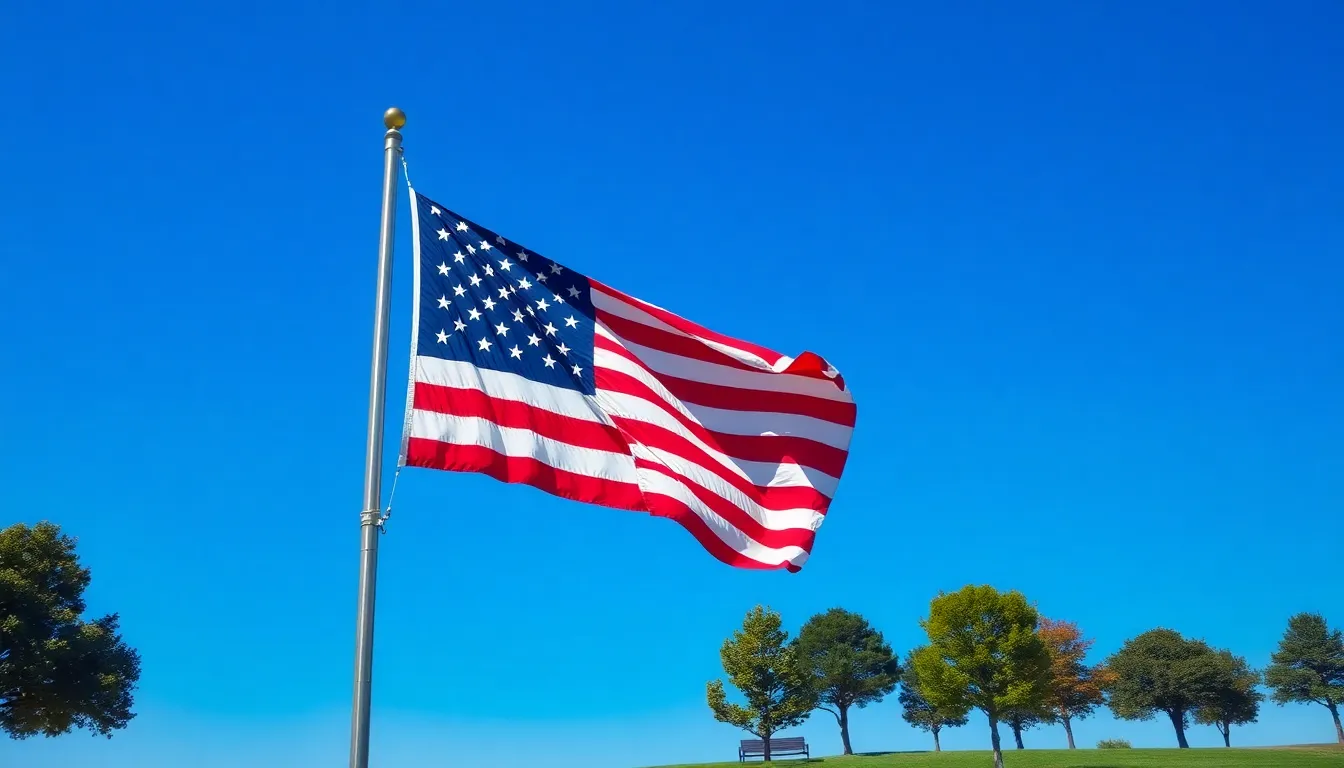
Understanding the historical context of flying flags at half staff or half mast provides insights into their significance. These practices date back centuries, embedding deep meanings within ceremonies of mourning and respect.
Origins of the Term
The term half staff originates from military flag protocols in the United States. It first appeared in the 17th century, referring to lowering flags in tributes for deceased military personnel. Half mast emerges from nautical traditions, associated with ships’ flags. Sailors began using this term when mourning losses at sea. Both terms reflect loss and honor, though their usage differs by domain.
Cultural Significance
Culturally, flying flags at half staff or half mast resonates with shared grief and collective respect. In the United States, lowering a flag often accompanies national tragedies or the passing of public figures. This gesture fosters unity among citizens in times of sorrow. Similarly, maritime communities commemorate lost sailors through half mast flags, reinforcing connections to those who served at sea. Each instance embodies a profound acknowledgment of loss, cementing these practices in cultural memory.
Rules and Protocols
Understanding when to fly flags at half staff or half mast is essential for proper flag etiquette. Specific guidelines exist for various occasions, particularly in the United States. Flags are displayed at half staff in response to the death of government officials, members of the armed forces, and significant national tragedies. For example, the President might order flags to be flown at half staff for a designated period during national periods of mourning. Organizations and individuals often follow these directives to show solidarity with the nation during times of loss.
When To Fly Flags at Half Staff
Flags are typically flown at half staff from sunrise to sunset. Situations warranting this practice include memorial services for noteworthy public figures or following tragic events. Cases involving the death of a sitting president, a vice president, or other high-ranking officials also apply. Additionally, specific state proclamations may declare when flags should be lowered. Observances often mark significant anniversaries related to tragic events, allowing communities to unite in remembrance and respect.
Different Countries’ Regulations
Different countries maintain unique regulations regarding flag protocol. In Canada, the Prime Minister determines when flags across the nation are to be flown at half mast. United Kingdom customs allow flags to be flown at half mast at designated locations to mark the passing of royal family members or significant national tragedies. Australia adheres to similar guidelines, where flags are lowered in mourning for national events. Each nation’s practices embody cultural values and convey a collective expression of grief and respect. Understanding these regulations enriches appreciation for global flag customs.
Common Misconceptions
Misunderstandings often arise regarding the terms half staff and half mast.
Half Staff vs. Half Mast
Half staff is a term utilized in the United States, while half mast is predominantly used in maritime contexts. The difference lies in the environments; half staff denotes flags on land, and half mast indicates flags on ships. Both practices symbolize mourning and respect, but the application varies based on location. It’s common for individuals to interchange these terms erroneously, leading to ambiguity. Recognizing the distinction enhances clarity and respect for flag traditions.
Variations in Usage
Variations in usage depend on cultural context and established protocols. In the U.S., specific guidelines dictate when to fly flags at half staff, such as during national tragedies or the passing of government officials. Conversely, countries like Canada and Australia observe different rules, reflecting their unique cultural expressions of grief. Ships traditionally follow naval customs, with half mast flag displays reserved for maritime loss. Each cultural variation offers insight into collective mourning, emphasizing how flag protocols resonate within communities.
Understanding the distinctions between half staff and half mast enriches one’s appreciation of flag traditions. These practices serve as powerful symbols of mourning and respect across different contexts. Whether in the United States or maritime environments, flying a flag at half staff or half mast unites communities in collective grief. The historical roots and cultural significance behind these terms highlight their importance in honoring those who have passed. Recognizing the protocols and meanings associated with these practices fosters a deeper connection to shared values and traditions.