







In today’s fast-paced world, AI machine automation is transforming industries and reshaping the way businesses operate. From manufacturing to customer service, companies are leveraging advanced technology to streamline processes, reduce costs, and enhance productivity. This shift towards automation not only boosts efficiency but also opens up new opportunities for innovation.
As organizations embrace AI-driven solutions, they’re discovering the potential to improve decision-making and foster creativity. By automating repetitive tasks, employees can focus on higher-value work, leading to increased job satisfaction and better outcomes. The rise of AI machine automation is not just a trend; it’s a revolution that’s redefining the future of work.
Overview of AI Machine Automation
AI machine automation refers to the use of artificial intelligence technologies to automate routine tasks within various industries. Organizations leverage AI systems to enhance operational efficiency and reduce the reliance on human intervention for repetitive activities. AI algorithms analyze data, recognize patterns, and execute tasks intelligently, allowing businesses to streamline processes and improve accuracy.
Implementing AI machine automation often results in significant cost reductions. By minimizing human error and increasing speed, organizations can achieve higher productivity levels. For instance, AI-powered chatbots handle customer inquiries efficiently, reducing the need for extensive support staff. Additionally, manufacturing sectors utilize robotic process automation (RPA) to optimize production lines and minimize downtime.
Job roles evolve with AI machine automation adoption as employees shift from mundane tasks to more strategic initiatives. With automation relieving staff from repetitive duties, individuals focus on creative problem-solving and innovation. This transformation fosters a more engaged workforce, contributing to improved job satisfaction and overall morale.
Challenges accompany the transition to AI machine automation, including workforce adaptation and integration complexities. Equipping employees with the necessary skills through training programs ensures seamless transitions. Addressing these challenges enables organizations to fully harness the benefits of AI machine automation to drive growth and innovation.
AI machine automation plays a crucial role in modernizing business operations, enhancing productivity, and reshaping workforce dynamics.
Key Technologies Behind AI Machine Automation
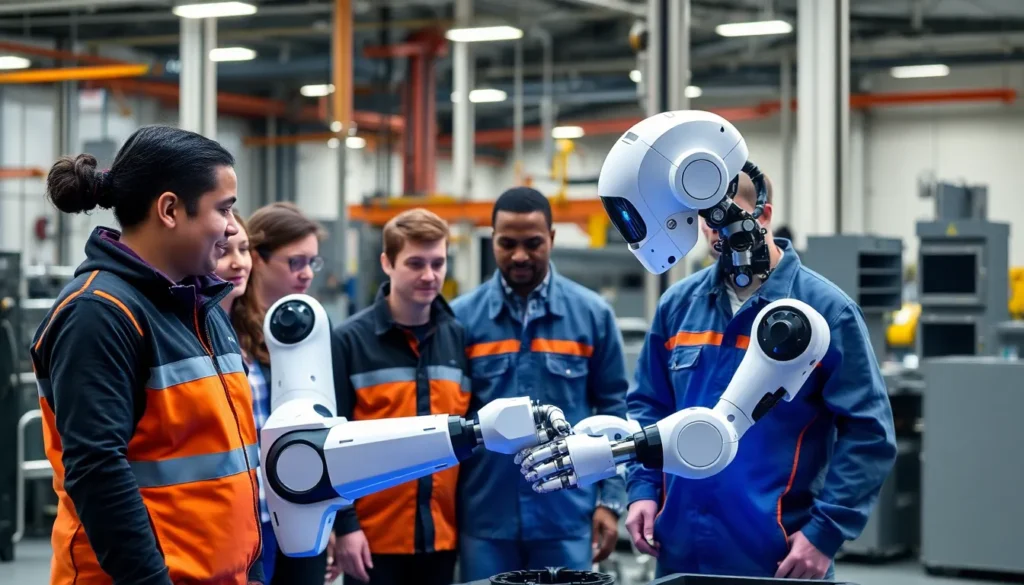
AI machine automation relies on several key technologies that facilitate the efficient and effective execution of tasks. These technologies empower organizations to streamline operations and enhance productivity.
Machine Learning Algorithms
Machine learning algorithms serve as the backbone of AI automation. They analyze historical data, identify patterns, and make predictions, enabling machines to learn from experience. Popular algorithms include:
- Supervised Learning: Trains models on labeled datasets to predict outcomes based on input features.
- Unsupervised Learning: Finds hidden patterns in unlabeled data, useful for clustering and segmentation tasks.
- Reinforcement Learning: Optimizes decision-making by training models through trial and error, enhancing performance in dynamic environments.
Organizations leverage machine learning algorithms in various applications, such as predictive maintenance in manufacturing and personalized recommendations in e-commerce.
Robotics and Automation
Robotics integrates AI with physical machines to automate tasks across different sectors. Robotics and automation encompass:
- Industrial Robots: Use AI to perform repetitive production tasks, increasing efficiency and precision.
- Collaborative Robots (Cobots): Work alongside humans, performing tasks like assembly or packaging while enhancing safety and productivity.
- Mobile Robots: Navigate environments autonomously, facilitating delivery and inventory management in warehouses.
AI-driven robotics streamlines operations, reduces costs, and enhances safety, making it a crucial component of AI machine automation.
Benefits of AI Machine Automation
AI machine automation offers substantial advantages for organizations, enhancing their operations and driving progress. This section explores the key benefits, including increased efficiency and cost reduction.
Increased Efficiency
Increased efficiency ranks among the primary benefits of AI machine automation. AI systems execute tasks faster and with greater accuracy than humans. For instance, data analysis that once required hours can often be completed in minutes by AI algorithms, allowing organizations to respond swiftly to market changes.
Moreover, AI automates repetitive tasks, freeing employees for more strategic work. By reallocating human resources to value-added activities, organizations witness improved productivity and engagement. AI systems consistently monitor processes, identify bottlenecks, and implement adjustments in real-time, further optimizing workflows.
Cost Reduction
Cost reduction represents another critical advantage of AI machine automation. Organizations significantly lower operational expenses by minimizing reliance on human labor for routine tasks. For example, automating customer support with AI-driven chatbots can reduce staffing needs while maintaining service quality.
Additionally, AI enhances resource management by predicting demands and optimizing supply chains, leading to reduced inventory costs and waste. The upfront investment in AI technology often results in long-term savings, making it a financially sound approach for many businesses. Through these mechanisms, AI machine automation streamlines expenditures, contributing to overall fiscal health.
Challenges in AI Machine Automation
AI machine automation presents several challenges that organizations must confront to maximize its potential. Two prominent areas of concern include ethical considerations and job displacement.
Ethical Considerations
Ethical considerations play a crucial role in AI machine automation. Organizations face dilemmas regarding data privacy, algorithmic bias, and accountability. Data privacy issues arise when AI systems require vast amounts of data, potentially exposing sensitive information. Algorithmic bias can lead to unfair treatment of certain groups if the training data contains prejudices. Accountability becomes significant when AI systems make decisions that impact individuals or groups. Ensuring transparency in AI decision-making processes fosters trust and addresses these ethical challenges, making it essential for organizations to adopt responsible AI practices.
Job Displacement
Job displacement represents a significant challenge associated with AI machine automation. Many traditional roles may become redundant as organizations automate tasks previously performed by humans. While automation enhances efficiency and reduces costs, it can also lead to workforce uncertainty and resistance. Employees must adapt to new roles focused on strategic thinking and creativity, demanding reskilling and upskilling initiatives. Organizations must prioritize workforce development by offering training programs and career support to ease the transition and mitigate the negative impact of automation on job security.
Future Trends in AI Machine Automation
AI machine automation continually evolves, driving significant advancements across industries. Emerging trends highlight areas where organizations can further enhance productivity and operational efficiency.
- Increased Use of AI-Driven Decision Making
AI systems analyze vast data sets to provide real-time insights. Organizations adopting these systems can make data-driven decisions quickly. For example, AI algorithms in finance help predict market trends, enabling firms to capitalize on investment opportunities effectively.
- Expansion of Collaborative Robots (Cobots)
Collaborative robots work alongside human operators in various settings. The growing adoption of cobots in manufacturing leads to enhanced efficiency and safety. Cobots assist with mundane tasks, allowing human workers to engage in higher-value activities.
- Advancements in Natural Language Processing (NLP)
NLP significantly elevates customer interactions through AI. Businesses implementing advanced NLP can automate complex customer service inquiries. This technology makes communication more intuitive, improving user experience and satisfaction.
- Rise of Autonomous Systems
Autonomous systems are taking on responsibilities in logistics and transportation. For instance, self-driving delivery vehicles streamline distribution processes. Organizations utilizing autonomous technology reduce delivery times and operational costs significantly.
- Integrating AI with Internet of Things (IoT)
The synergy of AI and IoT enhances automation capabilities. Smart devices equipped with AI collect and analyze data in real time, improving efficiency in manufacturing and supply chain management. Organizations benefit from proactive decision-making based on real-time insights from interconnected devices.
- Greater Focus on Ethical AI Practices
Ethical considerations remain crucial as AI machine automation expands. Organizations are beginning to implement frameworks to ensure transparency and fairness in AI algorithms. Prioritizing ethical practices fosters consumer trust and addresses concerns around bias and accountability.
These future trends in AI machine automation demonstrate the technology’s potential to transform operations, streamline workflows, and enhance decision-making processes across industries. Organizations that embrace these trends benefit from increased competitiveness and innovative capabilities.
AI machine automation is undeniably shaping the future of work across various industries. By enhancing efficiency and reducing costs, organizations are positioned to thrive in an increasingly competitive landscape. The integration of advanced technologies not only streamlines operations but also empowers employees to focus on strategic and creative endeavors.
While challenges like workforce adaptation and ethical considerations remain, proactive measures such as reskilling can mitigate these concerns. As businesses embrace AI-driven solutions, they pave the way for innovative practices that foster growth and engagement. The journey toward full automation is ongoing, but the potential benefits are clear, promising a transformative impact on productivity and operational excellence.