






Table of Contents
ToggleMobile robots are revolutionizing industries by enhancing efficiency and productivity. These autonomous machines navigate their environments, performing tasks that range from warehouse logistics to healthcare assistance. As technology advances, the capabilities of mobile robots continue to expand, making them invaluable assets in various sectors.
With the rise of artificial intelligence and machine learning, mobile robots are becoming smarter and more adaptable. They can learn from their surroundings and improve their performance over time. This transformation not only streamlines operations but also opens the door to new applications that were once thought impossible. Understanding the impact and potential of mobile robots is essential for anyone looking to stay ahead in today’s fast-paced technological landscape.
Overview of Mobile Robots
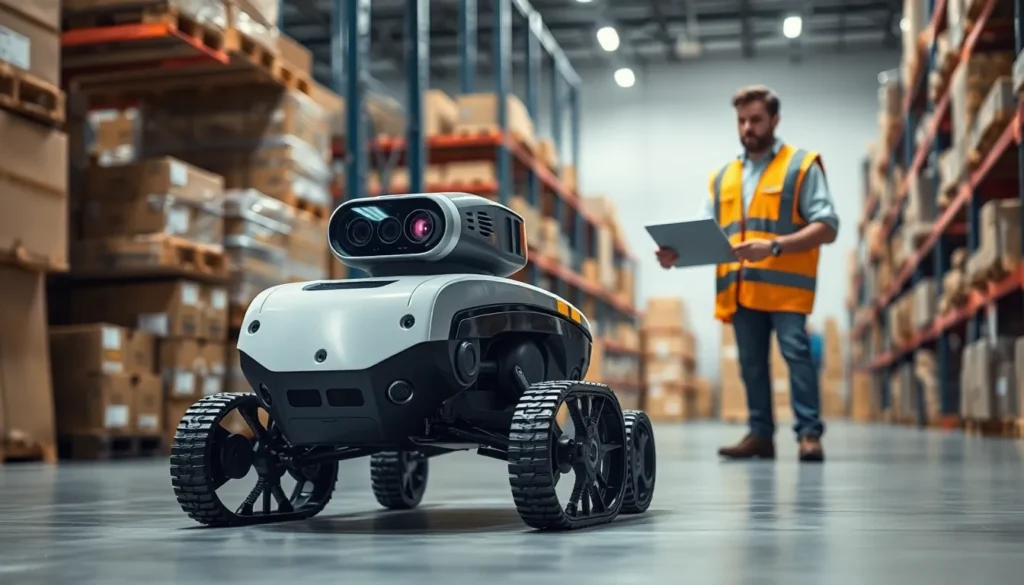
Mobile robots represent a significant advancement in robotics technology, designed to navigate and perform tasks independently in diverse environments. These robots utilize sensors, cameras, and artificial intelligence (AI) to perceive their surroundings and make decisions. Industries deploy mobile robots for various applications, including material handling, delivery services, and surveillance.
Types of Mobile Robots
- Autonomous Mobile Robots (AMRs):
- Navigate complex environments using AI algorithms.
- Examples include warehouse robots that transport goods, such as Amazon’s Kiva robots.
- Automated Guided Vehicles (AGVs):
- Rely on predetermined paths or tracks for movement.
- Often found in factories, transporting materials along fixed routes.
- Service Robots:
- Perform tasks for humans in settings like hospitals and hotels.
- An example is the TUG robot, which delivers medications and supplies in healthcare facilities.
- Drones:
- Operate in the air to carry out tasks such as aerial surveillance and delivery.
- Companies like DJI provide drones for both recreational and commercial use.
Applications of Mobile Robots
Mobile robots significantly impact multiple sectors:
- Manufacturing: Streamline production processes and reduce labor costs by automating repetitive tasks.
- Logistics: Enhance supply chain efficiency by automating inventory management and order fulfillment.
- Healthcare: Assist in surgeries and patient care, leading to improved outcomes and reduced wait times.
- Agriculture: Facilitate crop monitoring and harvesting, increasing yield and efficiency.
Benefits of Mobile Robots
Mobile robots offer numerous advantages:
- Increased Efficiency: Perform tasks faster than humans, allowing for higher throughput.
- 24/7 Operation: Function continuously without fatigue, enhancing productivity.
- Improved Safety: Handle dangerous tasks, reducing the risk of injury to human workers.
Mobile robots are increasingly integral to advancing operational capabilities across various industries. As technology evolves, they continue to change the landscape of automation and operational efficiency.
Types of Mobile Robots
Mobile robots encompass various types, each designed for specific operational tasks and environments. Understanding these types enhances comprehension of their applications and benefits.
Autonomous Guided Vehicles (AGVs)
AGVs navigate predetermined paths using sensors and predefined routes, often in warehouses and manufacturing settings. They transport materials and products efficiently, reducing human labor and minimizing errors. AGVs range in size, from small tugs to larger units, integrating with warehouse management systems for optimal scheduling. Popular models include Kiva Systems robots and Seegrid vehicles.
Unmanned Aerial Vehicles (UAVs)
UAVs, commonly known as drones, perform tasks like aerial photography, surveillance, and delivery. Equipped with cameras and sensors, they gather data and relay information in real-time. UAVs operate in various sectors, including agriculture for crop monitoring and logistics for parcel delivery. Notable examples include the DJI Phantom series for photography and Amazon Prime Air for delivery services.
Robotic Vacuum Cleaners
Robotic vacuum cleaners automate floor cleaning, offering convenience in residential and commercial spaces. These devices utilize sensors to navigate obstacles, creating efficient cleaning patterns. They improve cleanliness while saving time for users. Popular models include the iRobot Roomba and the Neato Botvac, both known for their smart mapping capabilities.
Applications of Mobile Robots
Mobile robots play a vital role across various industries, driving efficiency and innovation. Their applications extend from manufacturing to healthcare, agriculture, and beyond.
Manufacturing and Warehousing
Mobile robots streamline operations in manufacturing and warehousing. Automated Guided Vehicles (AGVs) transport materials along designated pathways, reducing manual labor and enhancing productivity. Autonomous Mobile Robots (AMRs) navigate dynamically, making real-time decisions. They manage inventory, assist in quality control, and facilitate order fulfillment, which accelerates processes. For instance, companies like Amazon use mobile robots to optimize their fulfillment centers, resulting in faster delivery times.
Healthcare and Elderly Assistance
Mobile robots improve patient care and assist with elderly support in healthcare settings. Robots are utilized for tasks such as delivering medications, transporting supplies, and even monitoring patients’ conditions. Telepresence robots allow remote consultations, enhancing accessibility to medical professionals. For elderly assistance, service robots provide companionship and aid with everyday tasks, promoting independence and improving the quality of life.
Agriculture and Environmental Monitoring
Mobile robots enhance agricultural efficiency and environmental monitoring. Drones offer aerial imagery for crop health analysis, facilitating precision agriculture. Ground-based robots automate planting, weeding, and harvesting, which optimizes land use and reduces labor costs. In environmental monitoring, robots collect data on soil conditions, water levels, and climate variations, contributing to sustainable practices and informed decision-making.
Advantages of Mobile Robots
Mobile robots offer numerous advantages that enhance operational efficiency across various sectors. Key benefits include:
- Increased Efficiency: Mobile robots streamline processes by performing tasks with minimal human intervention. They optimize workflow, allowing human workers to focus on more complex roles.
- 24/7 Operation: Mobile robots operate continuously without breaks, increasing productivity. They enable round-the-clock service in warehouses and healthcare facilities, ensuring tasks are completed promptly.
- Improved Safety: By taking on hazardous or strenuous tasks, mobile robots reduce the risk of injuries among human workers. They can handle heavy lifting and work in dangerous environments, protecting staff from potential harm.
- Cost Reduction: Mobile robots can lower labor costs and minimize operational expenses. They necessitate fewer human workers, which translates into savings on wages, benefits, and training.
- Enhanced Accuracy: Mobile robots execute tasks with high precision due to advanced sensors and AI technology. This accuracy leads to reduced errors in inventory management and patient care.
- Scalability: Organizations can easily scale operations by integrating additional mobile robots. This flexibility supports growth without significant investments in infrastructure or workforce.
- Data Collection: Mobile robots gather valuable data during operations, aiding organizations in analytics and decision-making. This information helps identify inefficiencies and optimize processes further.
- Adaptability: With advancements in AI, mobile robots can learn and adapt to changing environments. Their ability to navigate new layouts and update task parameters enhances their utility across various applications.
These advantages highlight the transformative potential of mobile robots in promoting efficiency and innovation across industries.
Challenges and Limitations
Mobile robots face several challenges and limitations that impact their deployment and effectiveness across industries.
- Navigation Complexity
Navigation in dynamic environments remains complicated. Mobile robots encounter obstacles and changing layouts, limiting their efficiency in environments like warehouses or busy public spaces.
- Technical Reliability
Increased reliance on technology leads to concerns about reliability. Technical failures, such as sensor malfunctions or communication errors, can halt operations and necessitate costly repairs.
- Cost of Implementation
Initial investment costs for mobile robots can be high. Organizations must consider expenses related to purchasing, maintaining, and integrating robots into existing systems, which can deter smaller businesses from adoption.
- Limited Task Scope
Mobile robots excel in specific tasks but struggle with versatility. They may not adapt to entirely new functions without significant reprogramming or additional training, constraining their use in more varied applications.
- Safety and Security Concerns
Safety protocols must be rigorous, as robots operating alongside humans risk accidents. Moreover, security vulnerabilities regarding hacking can expose sensitive data or control systems to threats.
- Regulatory Compliance
Navigating regulatory landscapes can pose hurdles. Compliance with safety standards and industry regulations varies by region, making it challenging for companies to ensure consistent operations across multiple locations.
- Human-Robot Interaction
Effective collaboration between humans and robots is crucial. Miscommunications or misunderstandings can hamper productivity, emphasizing the need for user-friendly interfaces and training programs.
- Data Privacy Issues
Data collection capabilities of mobile robots raise privacy concerns. Businesses must understand and address these issues to maintain customer trust while leveraging data for operational insights.
- Battery Life and Power Supply
Battery limitations restrict operational duration. Many mobile robots need frequent recharging or battery replacements, impacting efficiency and task execution time.
These challenges and limitations must be addressed to fully realize the potential of mobile robots in enhancing industry operations.
Mobile robots are reshaping the future of various industries by driving efficiency and innovation. Their ability to operate autonomously and learn from their environments positions them as vital assets in manufacturing, healthcare, logistics, and agriculture. As technology continues to evolve, these robots will likely become even more capable and versatile.
While challenges remain in navigation, reliability, and cost, addressing these issues will pave the way for broader adoption. Understanding the transformative potential of mobile robots is crucial for businesses seeking to stay competitive in an increasingly automated world. Embracing this technology now can lead to significant advantages in productivity and safety, ensuring a smoother transition into the future of work.